p-Nitrophenyl phosphate disodium salt hexahydrate (PNPP)
Product name: p-Nitrophenyl phosphate disodium salt hexahydrate
Synonym(s): p-Nitrophenyl Phosphate, Disodium Salt, Hexahydrate, pNPP, 2Na
CAS Number: 4264-83-9
Introduction
| Product Name | p-Nitrophenyl phosphate disodium salt hexahydrate (PNPP) |
| Items | Specifications |
| Appearance | Off-White to pale yellow crystalline powder |
| Purity | ≥99.0% |
| Water content (by KF) | 29±2% |
| p-Nitrophenol | ≤0.1% |
| Free inorganic phosphates | ≤1% |
| εmax312 | ≥9800 |
| pH | 7.5-10.0 |
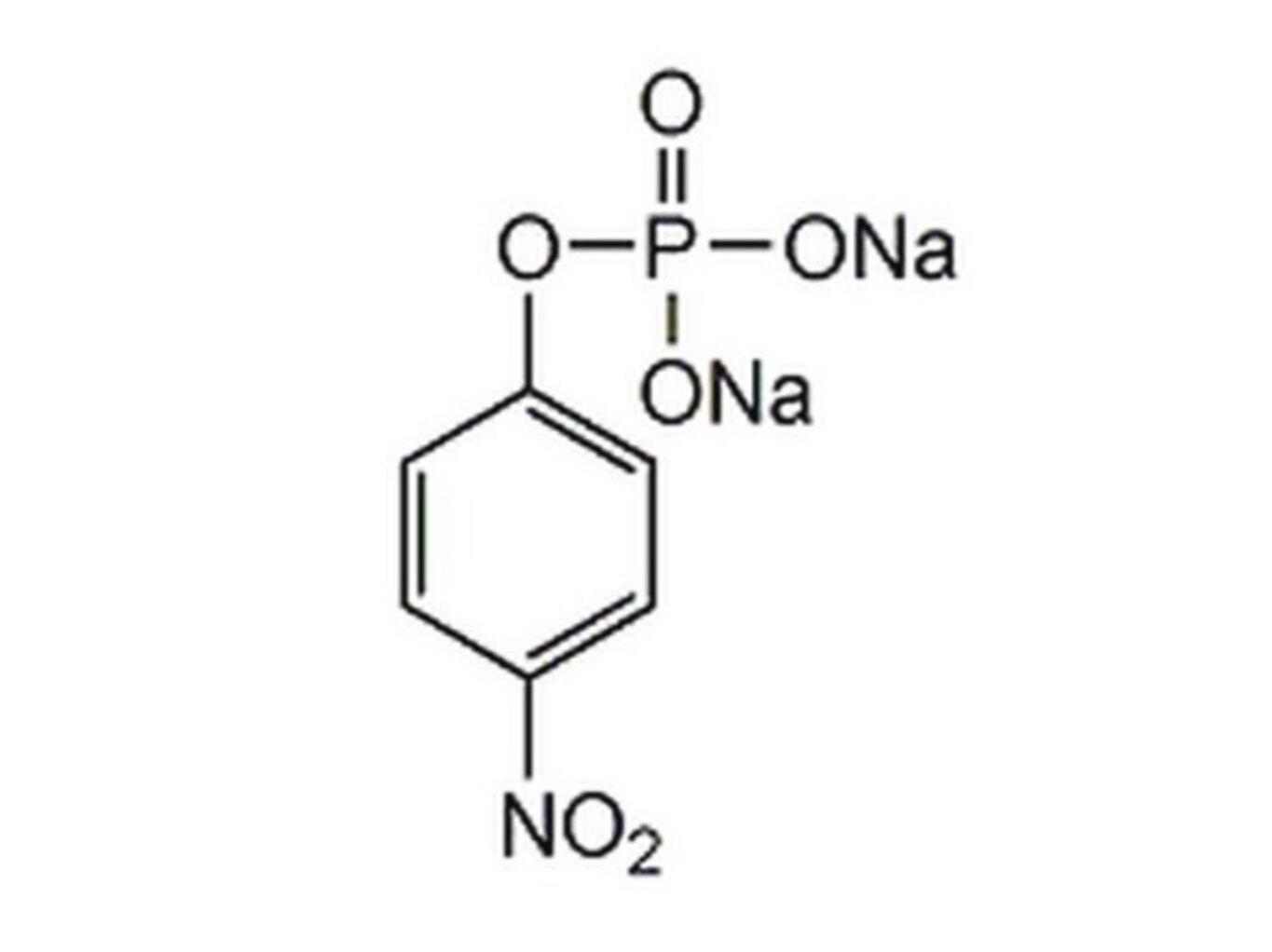
PNPP, with CAS number 4264-83-9, is Disodium 4-nitrophenyl phosphate, a widely used chromogenic substrate in biochemical assays.
1. Basic Physicochemical Properties
- Chemical Name: Disodium 4-nitrophenyl phosphate (PNPP)
- Synonyms: p-Nitrophenyl phosphate disodium salt, 4-Nitrophenyl phosphate disodium
- Molecular Formula: C₆H₄NNa₂O₆P (anhydrous) or C₆H₄NNa₂O₆P·6H₂O (hexahydrate)
- Molecular Weight: 263.05 (anhydrous), 371.14 (hexahydrate)
- Appearance: White to light yellow crystalline powder
- Melting Point: >300°C
- Solubility in Water: ~25 mg/mL at 25°C (some sources report 10 mg/mL)
- Stability: Slowly decomposes in solution above 25°C; sensitive to light and moisture. Store protected from light.
2. Primary Applications
PNPP is a common substrate for:
- Acid and alkaline phosphatases
- Protein tyrosine phosphatases
It is widely used in:
- ELISA (Enzyme-Linked Immunosorbent Assay)
- Spectrophotometric enzyme activity detection
- Enzyme kinetics studies
During enzymatic hydrolysis, PNPP produces yellow 4-nitrophenol, which can be measured at 405 nm. The reaction is typically stopped by adding 3 M NaOH.
3. Safety Information and Storage
- Hazard Classification: Corrosive (GHS05) and Health Hazard (GHS08)
- Safety Precautions:
- Rinse skin thoroughly with soap and water upon contact
- In case of eye contact, flush continuously with water for at least 15 minutes
- Wear gloves, goggles, and a mask during handling
- Storage Conditions: Seal tightly, protect from light, and store at 2–8°C; some variants recommend cool, dry storage